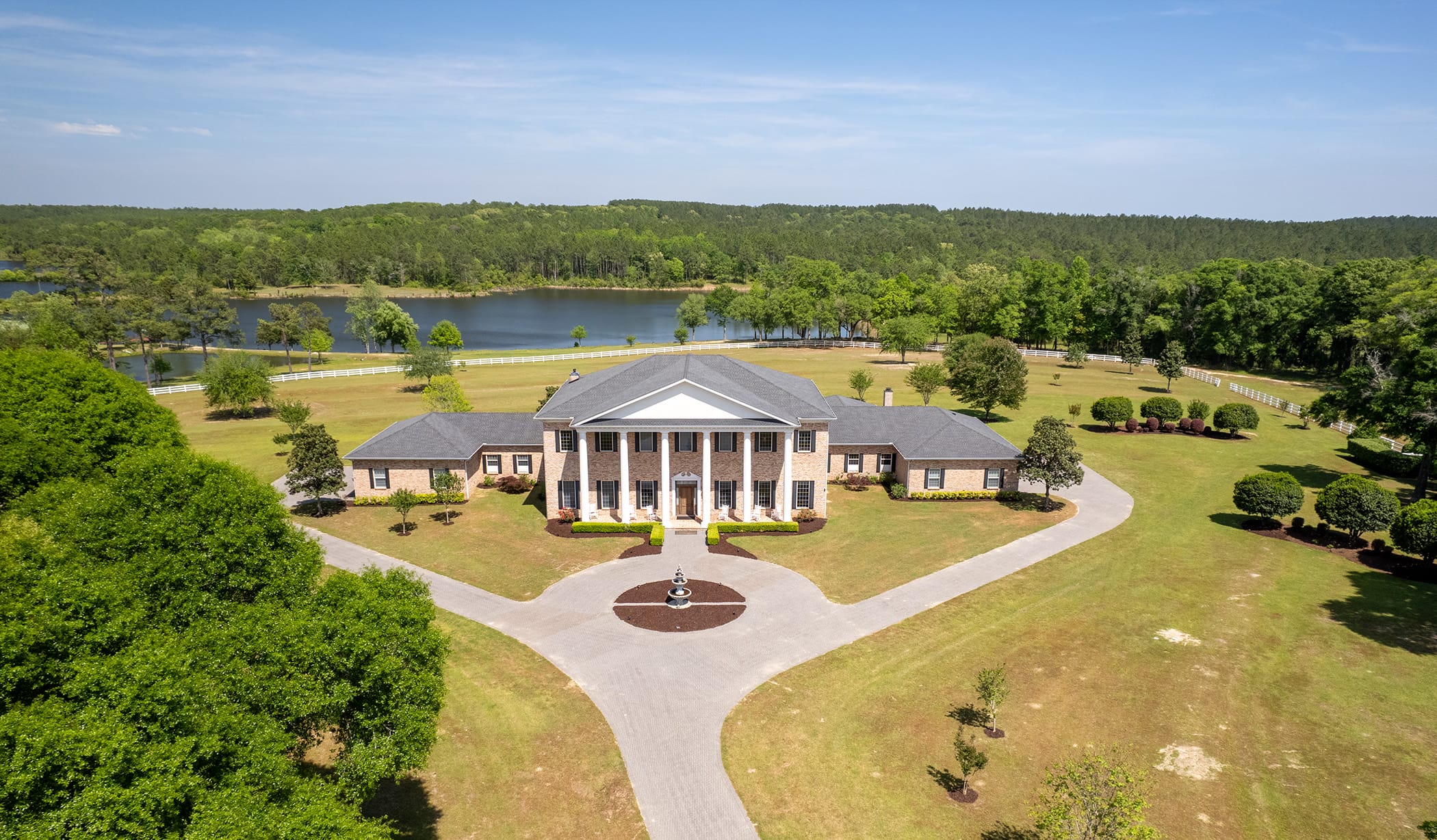
Financing Short-Term Rentals Investments
San Francisco's short-term rental market operates under one of the most specific regulatory frameworks in the United States. The city's Short-Term Rental Ordinance — administered through the Office of Short-Term Rentals — imposes host residency requirements, registration obligations, 90-day annual caps on unhosted rentals, and safety and insurance requirements that fundamentally shape the investment economics of any STR strategy within city limits. Investors who understand and operate within these regulations can generate premium nightly income from properties in high-demand tourist and business travel locations. Investors who misunderstand the regulatory framework face enforcement actions, registration revocation, and financial penalties that can eliminate the economic case for the investment.
Hard Money Lender San Francisco finances short-term rental acquisitions and conversions for investors who understand the SF regulatory environment and have documented compliance plans. We evaluate STR income using realistic projections within the city's regulatory framework — not optimistic estimates that assume rule-violating utilization. For investors seeking short-term rental income without the city's regulatory constraints, we also finance properties in surrounding Bay Area jurisdictions with different STR frameworks, as well as corporate housing and extended-stay properties that operate outside the SF STR ordinance's scope.
Beyond pure vacation rental, the broader short-term and medium-term rental market in the Bay Area — corporate housing for relocating Salesforce and Google employees, extended-stay accommodations for biotech clinical trial participants at UCSF, furnished apartments for tech-transfer professionals at Stanford — represents a substantial demand base that compliant furnished rental operators can serve with less regulatory complexity than traditional STR platforms impose.
Compliant SF STR acquisition financing covers owner-occupied properties where the borrower plans to list the property on STR platforms during periods of their own absence, in compliance with the city's residency and registration requirements. The 90-day cap on unhosted stays and the residency requirement effectively limit pure investor STR operations within SF; the compliant model is primarily owner-occupant hosting during travel periods or a limited number of nights per year. We underwrite these properties on their underlying real estate value and owner-occupant economics, not on STR income projections that assume full-year investment operation.
Corporate and executive housing acquisition financing is where SF's STR-adjacent market creates the most investment opportunity without the regulatory friction. Corporate relocation housing for C-suite executives and senior engineers moving to the Bay Area for Salesforce, Anthropic, Wells Fargo, or UCSF positions typically involves furnished apartments or homes on thirty-to-ninety-day minimum stays — outside the SF STR ordinance's scope. Demand for quality corporate housing in San Francisco, the Peninsula, and the East Bay consistently exceeds supply; investors who furnish and position properties appropriately can command two to three times standard residential rents for this clientele. We fund corporate housing acquisitions at up to 70% LTV with income projections based on comparable corporate housing rates.
Bay Area STR acquisitions outside SF city limits provide the investment economics of short-term rental without the SF Rent Ordinance, the SF STR ordinance's 90-day cap, or the host residency requirements. South Lake Tahoe and surrounding Eldorado County have active vacation rental markets. Napa County and Sonoma County wine country properties generate substantial vacation rental income in a less regulated environment. East Bay municipalities have varying STR regulatory frameworks, some of which are substantially more permissive than SF's. We finance Bay Area properties in jurisdictions where the investor's intended STR use is compliant with local regulations, evaluating each property against the specific regulatory framework of its location.
Conversion financing for properties transitioning from long-term to medium-term or corporate housing use funds the furnishing, technology upgrades, and professional staging required to position a property for premium short-term occupancy. Unlike standard long-term rentals, corporate and premium short-term housing requires complete furnishing packages, hotel-quality linens and housewares, keyless entry, high-speed internet, and professional photography. We fund conversion costs as a draw component within the acquisition loan for properties making this transition.
Common Challenges We Solve
SF STR regulatory compliance is the dominant challenge for investors considering short-term rental investment within the city. The 90-day annual cap on unhosted rentals (nights rented while you are not present in the unit) combined with the requirement that the property be the host's primary residence fundamentally limits the investment model for pure STR investors. Violations carry fines, registration revocation, and in some cases income disgorgement obligations. We underwrite SF STR properties conservatively — on the assumption of compliant operation — rather than projecting income that would require regulatory violations to achieve.
Platform policy changes add regulatory risk to STR investment. Airbnb, VRBO, and other STR platforms have modified their SF policies multiple times in response to city enforcement actions and their own compliance commitments to local regulators. Investors who plan income based on current platform availability should model regulatory-change scenarios that reduce permissible listing nights or require additional documentation. We structure STR-adjacent loans with exit strategies that do not depend exclusively on platform availability.
Property association restrictions affect STR feasibility for condo and HOA-governed properties. Many SF condo associations have explicit STR restrictions in their CC&Rs, prohibiting short-term rentals by any unit owner. We verify CC&R compliance before closing any financing on a property intended for STR use in a building with HOA governance. Properties with STR restrictions in their governing documents do not qualify for STR acquisition financing from our program.
Our Approach
We finance STR-adjacent properties — compliant SF STR, corporate housing, Bay Area STR in permissive jurisdictions — with our standard residential investment loan parameters: up to 70% LTV, seven-to-fourteen-day close, no income documentation. For pure SF STR (owner-occupied with compliant hosting periods), we underwrite on residential owner-occupant economics with STR income as a secondary consideration. For corporate and extended-stay properties, we project income using comparable corporate housing rates and market demand data. For Bay Area STR outside SF, we evaluate the specific jurisdiction's regulatory framework and project income conservatively within compliant operating parameters.
Frequently Asked Questions
Do you finance properties intended for short-term rental in San Francisco?
Yes, with an important caveat: we finance SF STR investments on the assumption of full regulatory compliance. SF's Short-Term Rental Ordinance requires host residency, registration, and limits unhosted rentals to 90 nights per year. We underwrite SF STR properties on owner-occupant economics with compliant STR income as supplemental, not the primary income assumption. For investors seeking pure investment STR economics — full-year rental without residency requirement — we finance properties in Bay Area jurisdictions with more permissive STR regulatory frameworks.
What loan-to-value ratios do you offer for short-term rental properties in the Bay Area?
For corporate housing and extended-stay properties with documented comparable income from similar uses, we offer up to 70% LTV. For compliant SF STR owner-occupant properties, we offer up to 72–75% LTV based on residential owner-occupant value. For Bay Area STR properties in jurisdictions with established, stable STR regulatory frameworks, we offer 65–70% LTV with income projections based on conservative compliant utilization. For properties in jurisdictions with volatile or uncertain STR regulation, we may apply lower LTV ratios reflecting regulatory risk to the income assumption.
How do you evaluate income for short-term rental properties?
We evaluate STR income using AirDNA market data, comparable STR performance in the immediate area, seasonal occupancy patterns, and realistic vacancy factors. We apply regulatory utilization caps (such as SF's 90-day annual unhosted cap) to the gross potential income before arriving at underwritten net operating income. For properties with no STR operating history, we use conservative comparables with a 20–30% discount to market-average performance to account for ramp-up time and platform ranking uncertainty. We do not use gross revenue estimates from STR platforms' internal tools as our primary income underwriting — these tools are optimistic by design.
Can I convert a long-term rental to corporate housing use with hard money financing?
Yes. Corporate housing conversion is a common and well-supported application in our program. We fund the acquisition of properties suitable for corporate housing use — typically two-bedroom or larger units in Pacific Heights, the Marina, Nob Hill, or other neighborhoods with strong corporate relocation demand — and include a furnishing and preparation draw of $30,000–$80,000 in the loan structure to fund the complete furniture package, technology setup, and professional staging required for corporate housing positioning. The conversion timeline is typically thirty to forty-five days from closing; we release the furnishing draw upon completion of the installation and staging, verified by a simple property walkthrough.
What happens if San Francisco changes its STR regulations after I buy?
Regulatory change risk is inherent to STR investment in SF and is a factor we discuss at term-sheet stage. Our STR loans are structured with exit strategies that do not depend exclusively on STR income: the underlying property must be viable as a long-term rental or owner-occupant property at the loan's LTV parameters independent of STR income assumptions. If SF restricts STR further during your loan term, the property's long-term rental value — which we analyze as a baseline — determines whether the collateral still supports the loan. We structure STR loans conservatively for exactly this reason: regulatory uncertainty is a known risk, not an unexpected event.