Financing Industrial Warehouses Investments
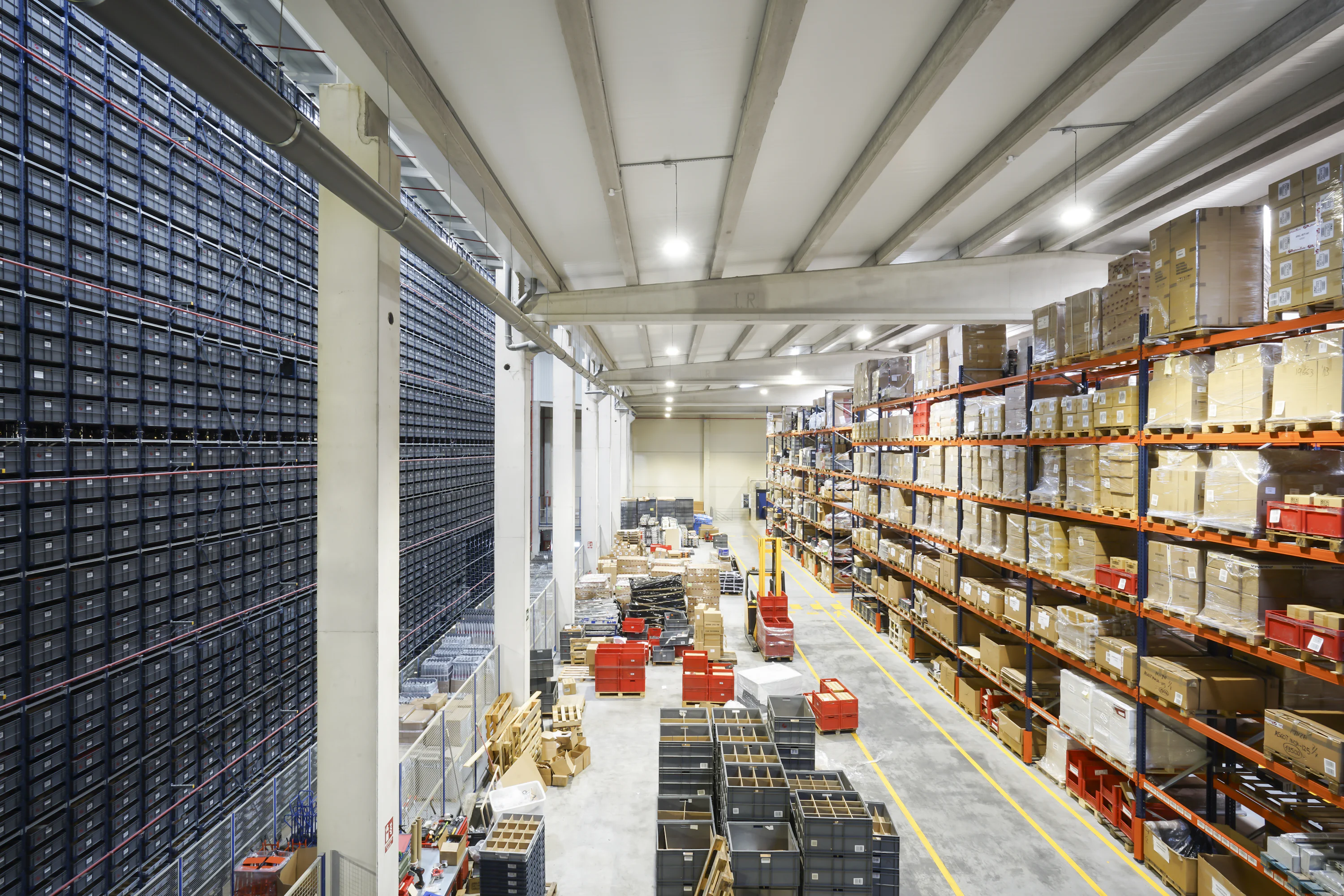
Industrial real estate in the San Francisco Bay Area has been transformed by the region's technology and life sciences economy. Legacy warehouse and manufacturing buildings that housed printing companies, food processing operations, and light manufacturing in the twentieth century are being repositioned as creative office, R&D, biotech wet lab, urban logistics hubs, and maker space in the twenty-first. The demand drivers are robust — the Bay Area's innovation economy needs non-traditional space that combines high ceilings, flexible layout, and urban proximity in ways that conventional office buildings cannot provide — and the supply of industrial buildings that can accommodate these uses is constrained by limited land, high redevelopment costs, and SF Planning's Production, Distribution, and Repair (PDR) zoning protections in certain neighborhoods.
Hard Money Lender San Francisco provides industrial warehouse financing throughout the Bay Area — San Francisco's Bayview-Hunters Point and SoMa industrial districts, the Peninsula's technology-oriented flex space corridor, Oakland's industrial waterfront, and the East Bay's distribution and logistics hub. We close in two to three weeks for acquisitions and ten to fourteen days for refinancing. Our industrial underwriting accounts for the Bay Area's specific tenant demand, lease structures, and environmental complexity rather than applying national industrial metrics to a distinctly local market.
The community benefit and environmental review requirements that apply to industrial development and repositioning in San Francisco's Bayview-Hunters Point neighborhood make it a specialty market that most lenders approach with generic industrial underwriting templates that miss critical local factors. We have financed Bayview industrial projects with CBA obligations, Phase II environmental requirements, and community engagement timelines embedded in our loan structures.
Creative office and R&D conversion financing is the Bay Area industrial sector's highest-value repositioning category. A legacy Bayview warehouse with 20-foot clear heights, heavy power, and loading dock access is worth substantially more repositioned as creative office or light R&D space for a biotech or software company than it is as a traditional warehouse. We fund both the acquisition and the conversion scope — HVAC upgrade, electrical service upgrade, ADA improvements, office buildout, and exterior improvements — in a single loan structure with milestone draws aligned with construction progress.
Urban last-mile logistics acquisition serves the SF delivery economy. San Francisco's density — 18,000 people per square mile — creates last-mile logistics demand from Amazon, FedEx, and regional grocery and restaurant delivery operators who need urban staging facilities with convenient freeway access. Small industrial buildings in Bayview, SoMa, and the Dogpatch that can accommodate delivery vehicle staging and package sorting are in high demand at premium rents. We finance these acquisitions at 65–70% LTV for stabilized properties with creditworthy tenants.
Multi-tenant industrial flex conversion divides large single-tenant warehouses into smaller spaces (3,000–10,000 SF) for multiple tenants — craftspeople, small fabricators, food producers, technology prototype shops, and maker-space operators who are priced out of the office market but need flexible industrial space. This conversion strategy produces higher per-square-foot rents than single-tenant industrial and diversifies vacancy risk. We fund multi-tenant conversion projects with construction draws aligned with subdivision permit milestones.
Industrial portfolio refinancing and cash-out serves Bay Area industrial property owners who have held buildings through the region's appreciation cycle. An Oakland industrial building acquired in 2012 for $1.5M that now appraised at $3.8M supports a cash-out refinancing that extracts $1.15M in equity (at 65% LTV, net of existing debt) for deployment into new acquisitions or business capital. No seasoning requirement. Close in ten to fourteen days.
Common Challenges We Solve
PDR zoning protections in San Francisco limit industrial conversion and redevelopment in areas zoned Production, Distribution, and Repair — a category SF Planning uses to protect industrial and production uses from displacement by office and residential. Bayview-Hunters Point has substantial PDR-zoned areas where residential conversion is restricted or prohibited and office conversion requires a discretionary approval demonstrating that the use serves the innovation economy rather than general office demand. Investors and developers who acquire PDR-zoned industrial buildings with conversion plans must verify entitlement feasibility with SF Planning before the acquisition commitment.
Environmental conditions are pervasive in the Bay Area's legacy industrial buildings. Former dry cleaners, auto shops, chemical storage facilities, and manufacturing operations have left soil and groundwater contamination that requires Phase I and often Phase II environmental assessment before acquisition and financing. The SF Department of Public Health's Brownfield Program and the SF Redevelopment Authority's successor obligations affect certain Bayview parcels with cleanup agreements that must be honored by new owners. We require Phase I ESAs for all Bay Area industrial acquisitions and Phase II investigations where Phase I identifies RECs.
Community benefit agreement requirements in Bayview-Hunters Point affect industrial repositioning projects in ways that national industrial lenders do not understand. Development or significant improvement of Bayview industrial properties frequently requires negotiation of community benefit agreements with neighborhood organizations — first-source hiring preferences, small local business contracting commitments, sometimes affordable commercial space provisions — that add cost and timeline to the entitlement process. We factor CBA negotiation into Bayview industrial loan term structures.
Our Approach
Industrial warehouse loans from $500,000 to $15 million, terms from six months to five years, 60–70% LTV depending on property type, tenant stability, and repositioning scope. Interest-only options for value-add and conversion projects. Bayview-specific CBA and environmental review provisions embedded in term structures for projects in that neighborhood. Term sheets within forty-eight hours. Closing in two to three weeks for acquisitions.
We lend to individual investors, LLCs, family trusts, and institutional entities with personal guarantees from principals. No personal income documentation for commercial industrial loans.
Frequently Asked Questions
What types of industrial properties do you finance in the Bay Area?
We finance the full range of Bay Area industrial property types: traditional warehouse distribution, creative office and R&D conversions, multi-tenant industrial flex, light manufacturing, food production facilities, cold storage, urban logistics hubs, and maker/innovation space. We also finance specialty industrial assets including biotech wet lab buildings, technology hardware prototyping facilities, and urban agriculture properties. Both single-tenant and multi-tenant configurations are within our lending parameters. We evaluate each property on its individual characteristics — location, clear height, power capacity, loading configuration, environmental history — rather than applying rigid asset-type restrictions.
How do you evaluate industrial properties with environmental conditions in the Bayview?
We require Phase I ESAs for all Bay Area industrial acquisitions and Phase II investigations for Bayview properties where prior industrial use creates RECs. For properties with documented contamination, we evaluate the remediation cost estimate, the regulatory timeline for cleanup completion, and the availability of environmental insurance or seller indemnities before setting LTV. Properties with active remediation orders requiring owner action have additional loan covenant requirements tied to remediation milestones. We have financed Bayview properties with Phase II investigations in process, embedding environmental risk provisions in the loan terms rather than simply declining the transaction.
Can you fund an industrial-to-creative-office conversion in San Francisco?
Yes, industrial-to-creative-office and industrial-to-R&D conversion is a core specialty of our Bay Area commercial program. We fund both the acquisition and the conversion scope in a single loan structure, with construction draws released as conversion work is completed and verified. For conversions in SF PDR-zoned areas, we require confirmation from SF Planning that the intended conversion use is permissible under the applicable zoning before we close. Conversion projects in Bayview with CBA requirements must have the CBA framework established before we fund the acquisition draw. Conversion loans are structured with interest-only periods during construction and a refinance or sale exit at completion.
What DSCR do you require for Bay Area industrial properties?
For stabilized single-tenant industrial with long-term leases to creditworthy tenants, we target 1.15–1.25x DSCR. For multi-tenant industrial with diversified income and lower per-tenant concentration risk, we may accept 1.10–1.20x. For value-add or conversion properties with current vacancy or transitional tenancy, we evaluate stabilized projected DSCR based on conservative lease-up assumptions and may structure interest reserves to carry the property through the vacancy period. We apply Bay Area-specific market cap rates and comparable lease rate data rather than national industrial benchmarks that do not reflect the Bay Area's premium market.
What is the Bayview-Hunters Point community benefit agreement requirement and how does it affect financing?
Community benefit agreements in Bayview-Hunters Point are informal but practically required elements of gaining community support for new development or significant repositioning in the neighborhood. These agreements typically include first-source hiring provisions (preferential hiring for Bayview residents for construction and permanent jobs), small local business contracting commitments (a percentage of contract value going to Bayview-based businesses), and sometimes affordable commercial space provisions. CBAs are negotiated with community organizations like the Bayview Hunters Point Community Advocates, Southeast Alliance for Environmental Justice, and other neighborhood groups. They add timeline and cost to the entitlement process but are also genuine community investments that experienced Bayview developers view as part of the development cost structure. We factor CBA negotiation and compliance cost into our Bayview industrial loan term structures.